
Ask any long-time horse owner what worries them most about aging out a good horse, and joints usually come up before anything else. A horse’s soundness depends almost entirely on a handful of moving parts working together, and once those parts start to wear, everything from a trail ride to a trip to the water trough gets harder. Joint problems rarely announce themselves. They creep in over months or years, shaped by genetics, workload, diet, and plain bad luck, and by the time most owners notice something is wrong, the joint has usually been struggling for a while already.

The encouraging part is that joint health is not a mystery. There’s a well understood set of factors that drive it, a handful of habits that genuinely protect it, and a short list of warning signs worth watching for.
The Basic Anatomy Behind a Healthy Joint
A horse’s joint is a small, self-contained system built to handle enormous repeated force. Cartilage covers the ends of the bones and acts as a cushion, absorbing impact so bone does not grind against bone with every stride. Synovial fluid fills the joint capsule and works like a lubricant, reducing friction and helping deliver nutrients to cartilage that otherwise has almost no direct blood supply of its own. Ligaments hold everything in alignment, keeping the joint stable through turns and quick lateral movement.
When all three are functioning well, a joint moves freely and painlessly. When one starts to break down, usually cartilage thinning first, fluid quality drops, inflammation rises, and the joint that used to move without a second thought starts to stiffen. That’s why joint health is worth watching long before a horse shows obvious lameness, since by the time pain shows up the underlying tissue has usually already changed.
What Actually Puts a Horse’s Joints at Risk
Age is the factor everyone assumes matters most, but it rarely acts alone. Workload matters just as much. A horse in heavy training, especially one doing repetitive work like jumping or reining, puts far more cumulative stress on specific joints than a horse used for light trail riding. Past injuries compound the risk too, since a joint that has been sprained once tends to be more vulnerable the second time.
Conformation and genetics set the baseline nobody can change after the fact. Feed missing key nutrients can let inflammation run higher than it should, and excess weight is probably the most controllable factor of all, since every extra pound is extra force through those joints on every step. Most horses with joint trouble have several of these factors stacking together, not one alone.
Building Prevention Into a Horse’s Routine
Since workload is one of the biggest levers an owner actually controls, matching it to the horse’s fitness and age is the logical starting point, resisting the urge to push a young or recently rested horse straight into hard work. Recovery matters just as much as the workout itself, since a day of lighter movement or turnout after strenuous work gives joints a chance to reset.
Footing is another underrated variable. Deep or uneven ground forces joints to work harder, while hard surfaces send more concussive force up the leg. Neither extreme is ideal, so flat, consistent footing is worth prioritizing where available. Weight management belongs in the same conversation as exercise, and keeping a horse at a healthy body condition score is one of the simplest, cheapest things an owner can do.
Feeding for Long-Term Joint Support
Nutrition will not undo damage already done, but it influences how well a joint holds up going forward. Copper and zinc both play a part in maintaining healthy connective tissue, and gaps show up more than owners expect on forage-only diets. Omega-3 fatty acids matter on the inflammation side, keeping the joint’s internal environment calmer rather than constantly inflamed.
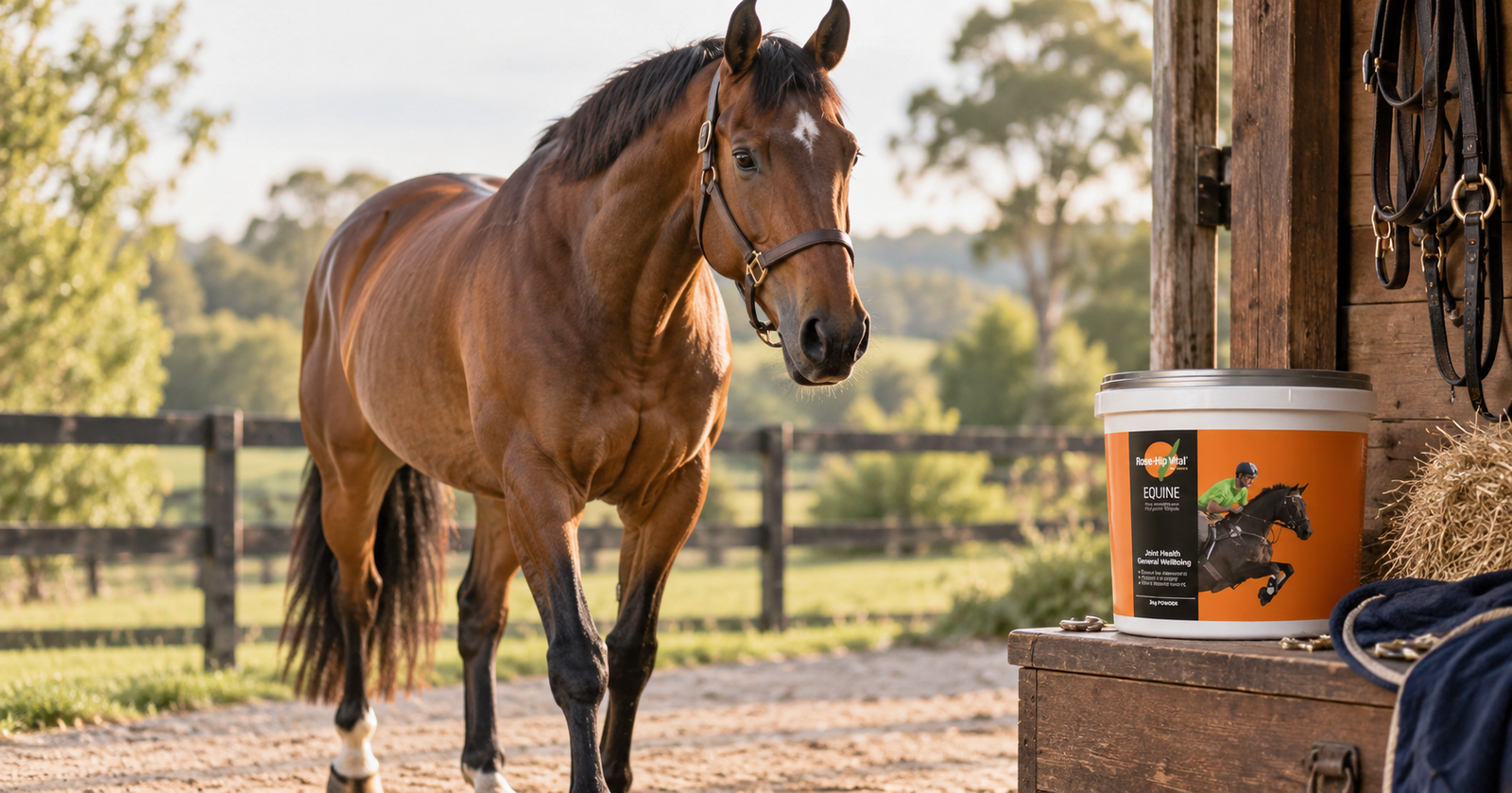
Whole-food anti-inflammatory options are worth a look too. Rosehip, and specifically the compound GOPO found in it, has been studied for its anti-inflammatory properties, and it is the reasoning behind products like Rose-Hip Vital Equine, which some owners add to a horse’s daily feed as one part of a broader plan rather than a standalone fix. Consistency matters more than any single ingredient.
Watching for Early Warning Signs
Most joint problems give some notice before they become serious, if you know what to watch for. A shorter stride, a slight reluctance to pick up one lead, or stiffness in the first few minutes of work are all worth noting rather than dismissing. Behavior changes often show up before gait does, like a horse that starts pinning its ears during grooming near a particular leg.
The most useful habit here is simply paying attention on ordinary days, not just before a competition. Watching a horse walk and trot in hand every so often gives you a baseline, so it’s easier to notice when something is off.
When It Is Time to Call the Vet
Persistent swelling, heat around a joint, or lameness that doesn’t improve within a day or two are reasons to get a professional opinion rather than wait it out, as is stiffness that keeps getting worse over weeks. Early diagnosis, through a lameness exam, flexion tests, or imaging, gives far more treatment options than waiting until the problem is advanced.
The Bottom Line
Joint health in horses comes down to a short list of things that genuinely matter: sound anatomy worth protecting, a handful of risk factors that tend to combine rather than act alone, and daily habits well within most owners’ control. Sensible workload, decent footing, a healthy weight, and a diet that covers the nutritional bases will not make a horse indestructible, but they go a long way. Add steady daily attention to what normal movement looks like, and most joint problems get caught early enough to manage well rather than late enough to become a crisis.
Leave a Reply