

Vomiting and diarrhea in dogs and cats are common digestive issues, but knowing when these symptoms signal a need for urgent veterinary attention can help you act quickly and avoid serious complications for your pet.
Most pet owners will see their dog or cat experience an upset stomach at some point, but deciding between monitoring at home and seeking urgent veterinary care can be difficult. Recognizing what sets a mild digestive upset apart from a true emergency is crucial for your pet’s wellbeing. UrgentVet is here for after-hours veterinary urgent care for pets, because Your Pet Can’t Wait to Feel Better ®. UrgentVet offers an alternative to a 24/7 emergency vet and is not open 24/7. Instead, it is available late nights, after hours, weekends, and holidays (365 days a year), providing a lower-cost ER vet option when your primary veterinarian is unavailable.
First signs to assess at home
Before deciding what to do next, consider your pet’s age, species, and medical history. Puppies, kittens, senior pets, and those with chronic conditions (such as diabetes or kidney disease) are at higher risk if symptoms worsen. Watch for vomiting or diarrhea that continues or escalates over several hours and check if your pet is unable to keep water down. Look for signs of dehydration such as dry gums, sunken eyes, less urination, or weakness.
Think about recent changes in diet, possible access to trash, new treats, travel, or stressful situations that could have caused the upset.
Symptoms that require urgent care
Certain symptoms mean your pet should be seen by a veterinarian that same day. Repeated or ongoing vomiting, especially if it comes with lethargy, collapse, shaking, or abdominal pain, can lead to dehydration or could signal a more serious problem. Blood in vomit or stool, black or tarry feces, or repeated attempts to defecate without results also indicate the need for prompt evaluation. If there’s reason to believe your pet ate something toxic or swallowed a foreign object, seek care immediately.
Higher-risk situations
Young or elderly animals, as well as those who are pregnant or have existing illnesses, are more susceptible to complications from gastrointestinal problems. Small dogs and cats can become dehydrated faster than larger pets. In these cases, not seeking care quickly may increase the risk of worsening illness.
When careful monitoring is reasonable
If your pet has one mild episode of vomiting or diarrhea but otherwise behaves normally, you may observe them at home. Continue monitoring for repeated symptoms, any drop in appetite or activity, and the appearance of new warning signs. If things persist, become more frequent, or new symptoms appear, contact a veterinarian.
What to expect during an urgent veterinary visit
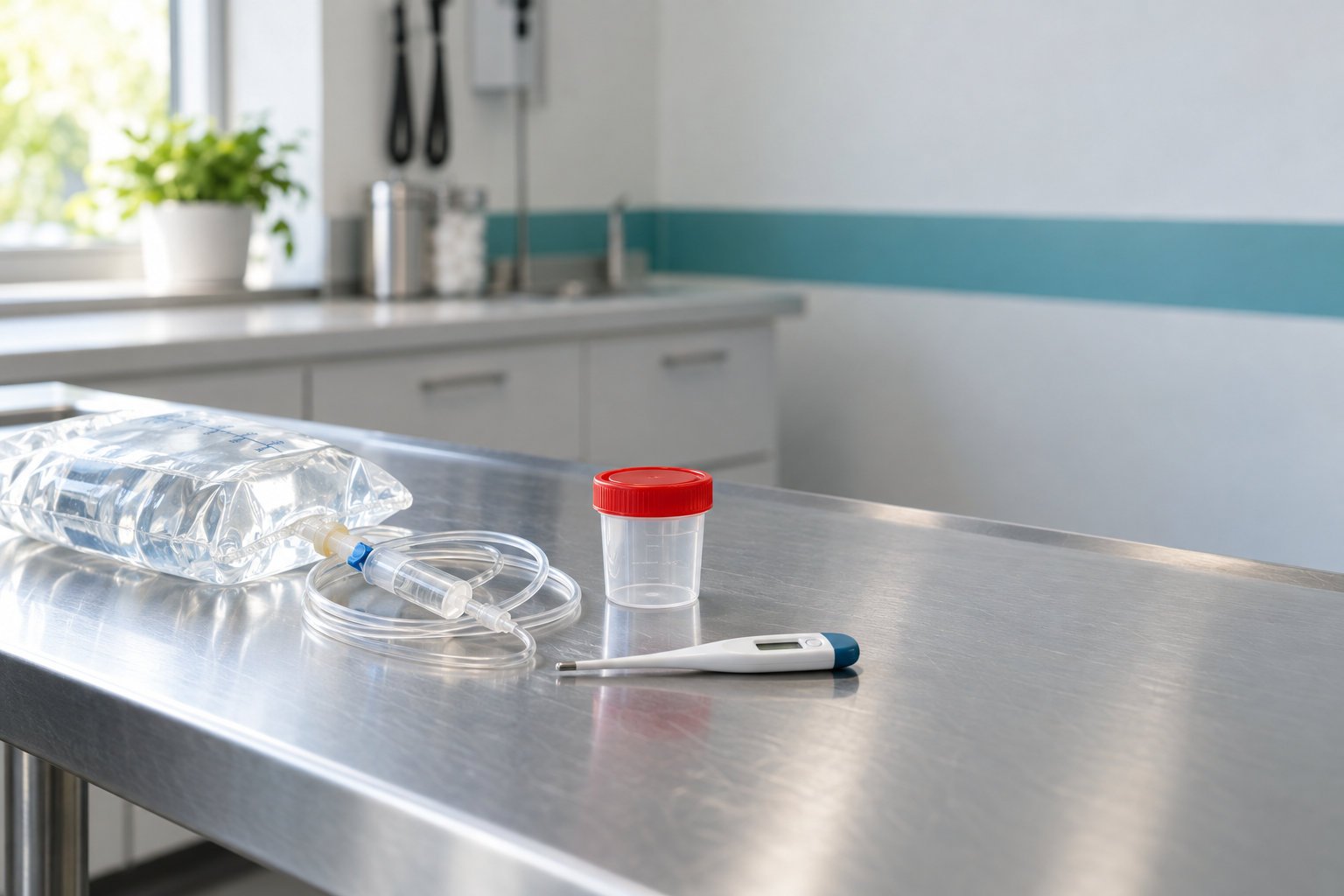
When you arrive for urgent care, the veterinary team will examine your pet and check hydration status. Depending on the situation, they may recommend stool tests, blood tests, or imaging if a toxin or foreign body is suspected. Treatment can include fluids, anti-nausea medication, or diet adjustments as needed.
If you choose this option for urgent pet care, you can expect services specifically designed for after-hours cases, filling the gap when your regular veterinarian is closed but providing a lower-cost alternative to a 24/7 ER clinic.
Preparing for the visit
Bring relevant details for your veterinarian: a timeline of symptoms, photos of vomit or stool if available, diet information, and a list of any medications or supplements your pet is receiving. If you suspect your pet has been exposed to a toxin or swallowed something unfamiliar, share this information during your visit to guide a more accurate assessment.
Acting quickly when your pet shows severe signs, especially in high-risk situations, can help prevent complications and support a faster recovery. If you are unsure whether your pet’s symptoms require urgent care, it is always best to seek advice from a veterinarian rather than waiting.


Leave a Reply